Lesson 9 of 17 · Managing risk
Position sizing and the 1% rule
Work out how big each trade should be so one loss never does serious damage.

- 1
Risk a small, fixed slice
Many traders risk only 1–2% of their account on any single trade. On a $10,000 practice account, 1% is $100. That means even ten losses in a row would leave you with most of your balance.
- Survival comes first — opportunities never run out.
- Losing streaks happen to every trader.
 2
Size from the stop distance
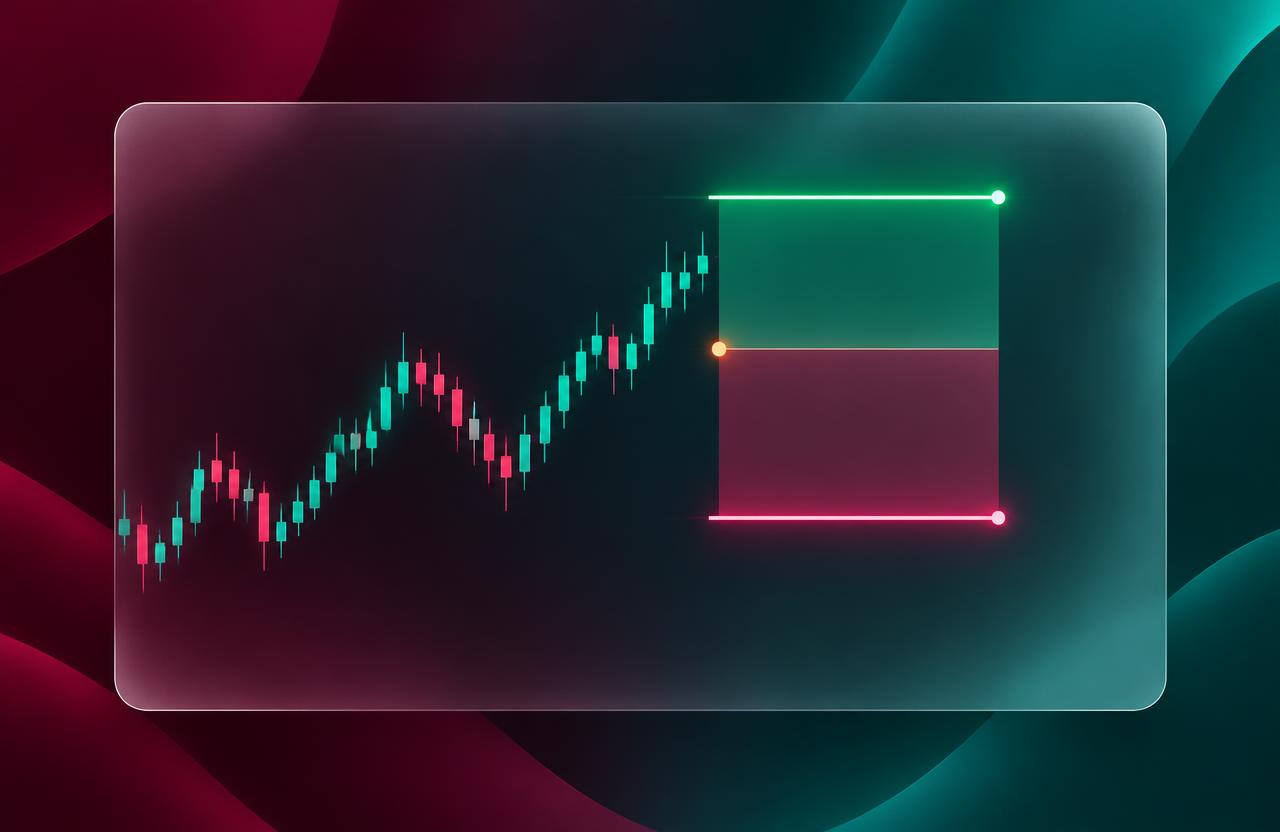
Trade size = amount you're willing to risk ÷ stop distance (as a percentage). If you risk $100 and your stop is 2% away, your trade size is $5,000. If the stop is 5% away, your size drops to $2,000.
- The Calculator page does this math for you.
- Same risk, different sizes — that's the point.
 3
Leverage doesn't change your risk plan
Leverage only changes how much margin a trade locks up. If your stop and size follow the rule above, your loss at the stop is the same whether you use 1x or 10x. The danger is using leverage to trade bigger than your plan allows.
- High leverage + no stop = fastest way to empty an account.
- Keep leverage low while learning.
- 4
Track your results
After 20–30 practice trades, check your history: average win, average loss and win rate. If your average win is bigger than your average loss, you can be profitable even when you're right less than half the time.
- Expectancy = (win rate × avg win) − (loss rate × avg loss).
- Judge a strategy on many trades, not one.
Key takeaways
- Risk 1–2% per trade.
- Size comes from your stop distance.
- Leverage is not a reason to trade bigger.