Lesson 6 of 17 · Reading charts
Trends and moving averages
Identify uptrends, downtrends and ranges, and use moving averages to stay on the right side of the move.
- 1
Spot the trend
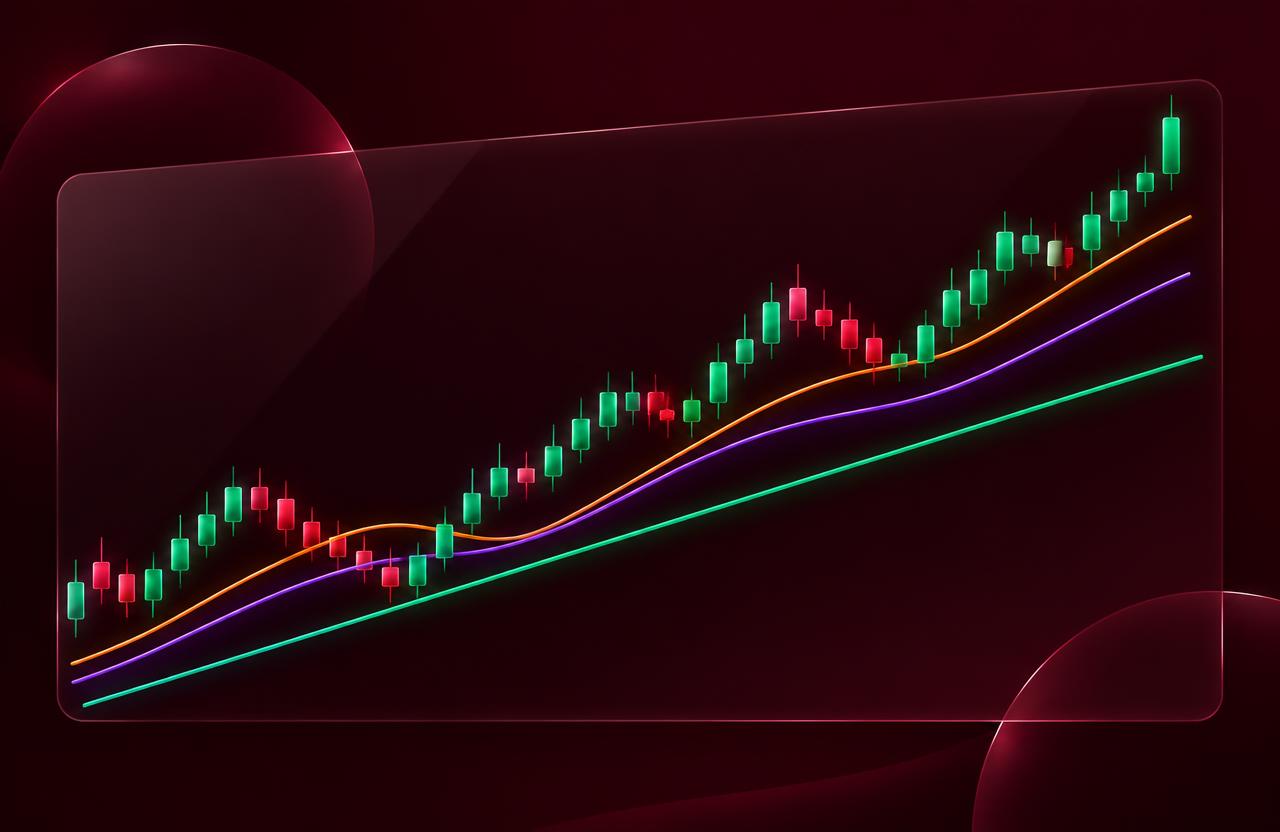
An uptrend makes higher highs and higher lows. A downtrend makes lower highs and lower lows. When price swings sideways between similar highs and lows, the market is ranging. Trading with the trend usually gives you the wind at your back.
- 'The trend is your friend' — until it ends.
- Ranges suit bounce trades; trends suit pullback trades.
- 2
Draw a trend line
In an uptrend, connect two or more rising swing lows with a straight line. In a downtrend, connect falling swing highs. Pullbacks to the line can offer entries, and a clean break of the line can warn that the trend is weakening.
- Don't force a line through candle bodies.
- Steeper lines break sooner.
- 3
Moving averages smooth the noise
A moving average plots the average closing price over a set number of candles, such as 20 or 50. Price above a rising average suggests an uptrend; price below a falling average suggests a downtrend.
- Short averages react fast; long averages show the big picture.
- Averages lag — they confirm, they don't predict.
 4
Crossovers and pullbacks
When a short average crosses above a long one, some traders treat it as a sign of a new uptrend (and the reverse for downtrends). Another approach is to wait for price to pull back to a rising average and buy when it bounces.
- Crossovers give many false signals in ranges.
- Combine averages with support and resistance.
Key takeaways
- Higher highs + higher lows = uptrend.
- Trade pullbacks in the direction of the trend.
- Moving averages confirm, they don't predict.